This seminar introduces the principles, design tradeoffs, practical implementations and suggested applications of near-field-focused (NFF) microwave antennas, i.e., radiating systems engineered to concentrate electromagnetic power density in a confined region within the radiative near field (Fresnel region) rather than in the far field. The core idea is to properly shape the aperture/array excitation phase so that the contributions from all radiating elements add constructively at a prescribed focal point; this enables a localized intensification of the field close to the antenna while often reducing unwanted radiation in the far field compared with conventional far-field-focused arrays.
Starting from planar arrays, the talk presents key figures of merit used to quantify NFF performance — such as focal shift, focusing gain, focus width and depth of focus (DoF) —and explains how they depend on the antenna electrical size, inter-element spacing, and focal distance normalized to the far-field boundary. Design guidelines and curves for near-field-focused arrays are discussed to support quick feasibility studies and to clarify the tradeoffs between achievable spot size, sidelobe behavior, and array complexity, including constraints related to spacing and practical array dimensions.The second part broadens the perspective to near-field shaping and synthesis techniques, contrasting the physically intuitive conjugate-phase approach with optimization-based strategies for controlling secondary lobes, enforcing multi-focus requirements, or tailoring the near field in complex environments. Finally, the seminar surveys enabling technologies — planar microstrip arrays, reflectarrays/transmitarrays, Fresnel-type solutions, leaky-wave and waveguide implementations — and highlights representative applications such as RFID and short-range links, industrial inspection and sensing, imaging and hyperthermia, wireless power transfer, near-field massive MIMO arrays, near-field reconfigurable intelligent surfaces, and antenna-measurements.

Paolo Nepa received the Laurea degree (summa cum laude) in electronics engineering from the University of Pisa, Pisa, Italy, in 1990, where he is currently a Full Professor and Coordinator of the PhD program in Information Engineering. In 1998, he was a Visiting Scholar with the Electro Science Laboratory (ESL), The Ohio State University, Columbus, OH, USA, where he was involved in research activities on efficient hybrid techniques for the analysis of large arrays. His research interests are in the design of wideband and multiband antennas for mobile communication systems and antennas optimized for near-field coupling and focusing, as well as in the development of propagation models of wireless radio links for indoor and outdoor scenarios. He was also working on channel characterization, wearable antenna design, and diversity scheme implementation, for body-centric communication systems. In the context of UHF-RFID systems, he is working on efficient and accurate techniques for radio localization of either tagged static objects or vehicles, which may be effective in the Internet of Things and Industry4.0 scenarios. He has co-authored more than 300 international journal articles and conference contributions.Since 2016, for two consecutive mandates, he has been serving as an Associate Editor for the IEEE Antennas and Wireless Propagation Letters, and he was a recipient of the Outstanding Associate Editors Awards in 2021. Since 2021, he has been serving as an Associate Editor for the IEEE Transactions on Antennas and Propagation and, since 2023, he has been serving as the Editor-in-Chief for the IEEE Journal of Radio Frequency. In 2019, he served as the General Chair for the IEEE RFID-TA 2019, Pisa, Italy.He was a recipient of the Young Scientist Award from the International Union of Radio Science, Commission B in 1998.
Wireless links are the enabling technology for seamless connectivity and high mobility within our society. In the near future, high-speed wireless networks will benefit from the massive amount of available bandwidth in the sub- and millimeter frequency range. Future networks will handle communication between users and objects located in the far-field and near-field regions of radiating devices. Antenna innovations are key to exploiting these broad bandwidths and to providing smart data links for mobile users. In this course, I will summarize my current studies on non-diffractive beams in the radiative near field. In particular, I will show how non-diffractive beams can be generated with planar radiating structures such as metasurfaces and radial line slot arrays with various field polarizations and bandwidths through the excitation of cylindrical leaky waves. The generation of X-waves (non-diffracting pulses) will also be discussed. A wideband, circularly polarized radial-line slot array will be introduced that can generate X-waves at millimeter-wave frequencies. The capability of non-diffractive beams to defeat the path loss and overcome obstructions will be introduced. A non-diffractive link made by two spline-profiled horn antennas generating Bessel beams at millimeter frequencies will be presented to show the resilience of non-diffractive links to obstructions. This experimental validation paves the way to a novel paradigm for next generation near-field wireless links.
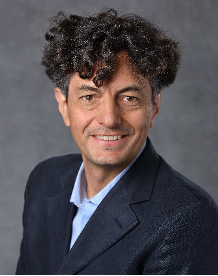
Mauro Ettorre received a Laurea degree “summa cum laude” in Electrical Engineering and a Ph.D. degree in Electromagnetics from the University of Siena, Italy, in 2004 and 2008, respectively. Part of his Ph.D. work was developed at the TNO, the Netherlands. Since 2023, he has been a Professor at Michigan State University, East Lansing, USA. Previously, he was a Research Scientist at the CNRS, IETR laboratory in France. Dr. Ettorre’s research interests include the analysis and design of quasi-optical systems, periodic structures, wideband arrays, millimeter-wave antennas, non-diffractive radiation, and localized waves. He has authored over 97 journal papers and 250 conference communications and holds 14 patents (2 licensed) on millimeter-wave antenna technology. Dr. Ettorre is a Fellow of IEEE. From 2017 until 2023, he served as Associate Editor for the IEEE Transactions on Antennas and Propagation. Since 2023, he has served as Track Editor for the same journal. He currently serves as the Editor-in-Chief of the IEEE Antennas and Propagation Magazine. Dr. Ettorre is the 2024 IEEE MTT-S and AP-S Inter-Society Distinguished Lecturer. The research activities of Dr. Ettorre have been recognized with several prizes, including the 2009 French Ministry of Research award for the most innovative project in all natural sciences, the Young Investigator Award from the French National Research Agency in 2014, the Innovation Award at the 2018 ESA Antenna Workshop in the Netherlands, the Best Paper Award in Electromagnetics and Antenna Theory at EuCAP 2018, UK, the Best Antennas Paper Award at EuCAP 2021, Germany and Best Paper Award at the iWAT 2023, Denmark.
The use of near-field focused leaky-wave antennas (NFF LWAs), their main distinctive aspects compared to other type of NFF antennas, and their potential applications, will be described in this lecture. In particular, NFF LWAs for deep microwave penetration in medical and imaging applications will be addressed, together with the main design rules and a summary of some efficient analysis techniques including ray-optics methods. As a main characteristic, the creationf of frequency-scanned NFF beams using single-fed LWAs in printed and waveguide technologies will be overviewed, and the generation of frequency-scanned Airy and Bessel beams will be considered as examples of NFF synthesis with different practical applications from microwave hyperthermia and MRI (Magnetic Resonance Imaging), to radiative wireless power transfer (RWPT) and JCAS (Joint Communication and Sensing).

José Luis Gómez Tornero received the Telecommunications Engineer degree from the Polytechnic University of Valencia (UPV), Valencia, Spain, in 2001, and the "laurea cum laude" Ph.D degree in Telecommunication Engineering from the Technical University of Cartagena (UPCT), Cartagena, Spain, in 2005. In 1999 he joined the Radio Communications Department, UPV, as a research student, where he was involved in the development of analytical and numerical tools for the automated design of microwave filters in waveguide technology for space applications. In 2000, he joined the Radio Frequency Division,Industry Alcatel Espacio, Madrid, Spain, where he was involved with the development of microwave active circuits for telemetry, tracking and control (TTC) transponders, working for international space agencies such as NASA, ESA, CNES and JAXA, and also for private satellite providers / operators such as Hispasat and Eutelsat. In 2001, he joined the Technical University of Cartagena (UPCT), Spain, as an Assistant Professor at the of Telecommunication Engineering.
From October 2005 to February 2009, he held de position of Vice Dean for Students and Lectures affairs in the Telecommunication Engineering Faculty at the UPCT. Since 2008, he has been an Associate Professor at the Department of Communication and Information Technologies, UPCT. Since December 2018 he holds a Full Professor position información Electromagnetics and Microwave Engineering st UPCT.
Numerical tools are a fundamental component of an electromagnetic researcher skill set, bridging the gap between conceptual design and practical implementation. Developing efficient and accurate models is essential to unlocking the research potential of new ideas. This is particularly true for near-field applications, where results are significantly more sensitive to numerical errors than in far-field analyses. This two-hour workshop focuses on the modelling and analysis of electrically large structures operating in the near-field regime. Participants will receive a comprehensive overview of the modelling workflow, including practical strategies for achieving reliable and computationally efficient simulations. The workshop will introduce innovative methodologies for leveraging commercial electromagnetic solvers, based on research and practical experience developed by Sérgio Matos over the past 13 years. The workshop will use CST Studio Suite as the primary demonstration platform, providing hands-on insights into effective modelling techniques for near-field electromagnetic problems.
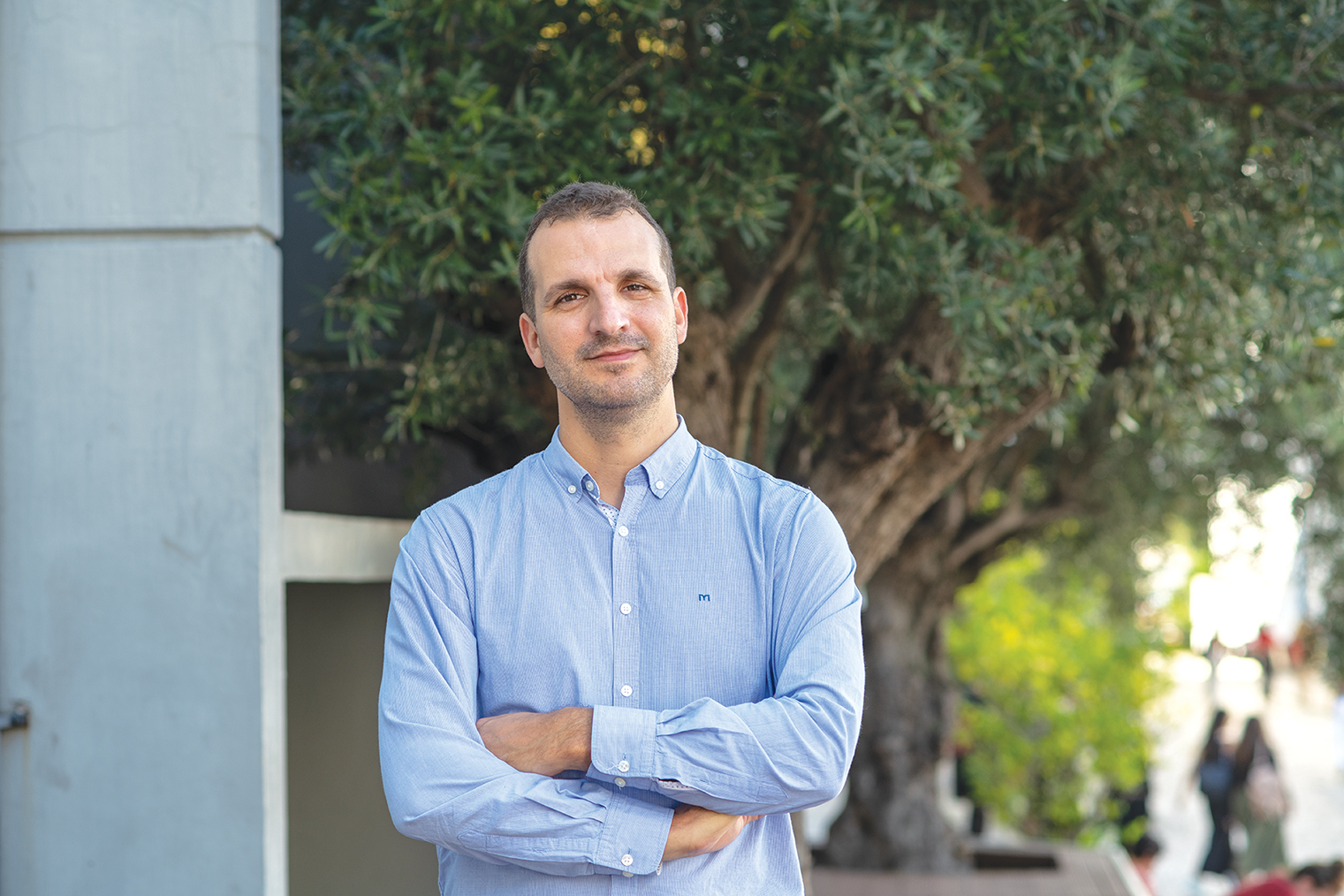
Sérgio Matos received the Licenciado, M.Sc., and Ph.D. degrees in electrical and computer engineering from Instituto Superior Técnico (IST), University of Lisbon, Lisbon, Portugal, in 2004, 2005, and 2010, respectively. He is currently a Researcher with the Instituto de Telecomunicações (IT), Lisbon, Portugal. He is also an Assistant Professor with Habilitation at the Departamento de Ciências e Tecnologias da Informação, Instituto Universitário de Lisboa (ISCTE-IUL). He is the co-author of more than 110 technical papers in international journals and conference proceedings. He is a consultant for the European Association on Antennas and Propagation and is a member of the European Conference on Antennas and Propagation (EuCAP) Steering Committee. He is a Senior Member of IEEE since 2019. He is also Chair of the Scientific Committee B (Fields and waves, Electromagnetic theory and applications) of the Portuguese International Union of Radio Science (URSI) Committee. His main research focus is on the design of Millimeter-wave antennas for satellite and 5G and 6G applications. He has high-impact contributions in the area of satellite communications at Ka-band in the context of national and international projects.
This half-day lecture is designed to provide a clear and pedagogical introduction to near-field antenna measurements. It starts by revisiting the basic concepts of electromagnetic near-field behavior and then presents the main near-field measurement techniques and facilities used in practice. Building on these fundamentals, the lecture introduces near-field–to–far-field transformation methods, with an emphasis on understanding their physical principles, accuracy limits, and the main sources of measurement uncertainty. Throughout the lecture, illustrative examples and typical measurement setups are used to reinforce key concepts and to highlight common challenges encountered in modern antenna characterization. In the second part, the lecture progressively moves toward more advanced topics, focusing on planar near-field measurement techniques. Special attention is devoted to the characterization of antennas optimized for near-field focusing at millimeter-wave and sub-THz frequencies. The lecture also addresses emerging applications, such as reconfigurable intelligent surfaces operating in the near-field regime, and presents several practical measurement case studies involving both transmissive and reflective configurations.
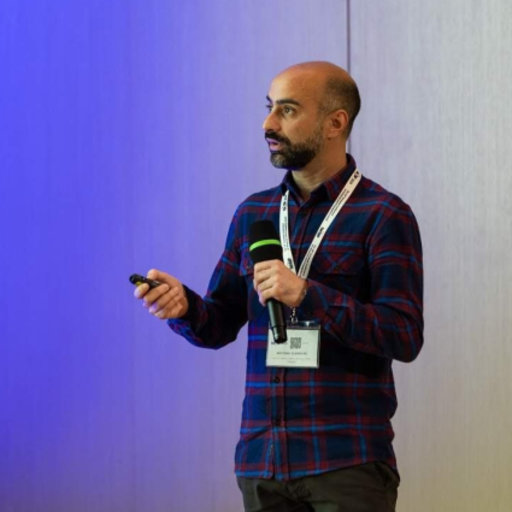
Antonio Clemente received the B.S. and M.S. degrees in telecommunication engineering and remote sensing systems from the University of Siena, Italy, and the Ph.D. degree in signal processing and telecommunications from the University of Rennes 1, France. He also obtained the Habilitation à Diriger des Recherches in 2021. He is currently a Research Director at CEA-Leti, Grenoble, France. His research activities focus on advanced antenna technologies for millimeter-wave and sub-terahertz systems, including fixed-beam and electronically reconfigurable transmitarray antennas, antenna-in-package (AiP) solutions, near-field focused systems, and reconfigurable intelligent surfaces. He has extensive experience in near- and far-field antenna measurements, synthesis, and modeling, bridging theoretical foundations with practical measurement challenges. Dr. Clemente has authored or co-authored more than 210 scientific publications and holds 35 patents. He has been involved in over 40 national, European, and international research projects and has received several international awards for his contributions to antenna design and applications (EuCAP, EuMC, ANTEM, etc.). He currently serves as an Associate Editor for IEEE Transactions on Antennas and Propagation and Scientific Reports, and actively contributes to the antennas and propagation community through editorial and professional service roles..
Wireless power transfer is an emerging technology with the potential to transform how energy is delivered in environments where physical connections are impractical or impossible. By transmitting energy through focused electromagnetic waves, power can be delivered remotely to electronic systems, opening new possibilities for applications ranging from consumer electronics to space systems. One particularly promising application is in small satellites, such as CubeSats, where wireless energy exchange between spacecraft could support cooperative missions and improve overall energy management. However, achieving efficient wireless power transfer requires careful control of how energy propagates, spreads, and is collected at the receiver. This workshop introduces the fundamental concepts behind wireless power transfer and the design strategies used to improve its efficiency. A simplified design model will be presented to illustrate how electromagnetic energy can be shaped and directed toward a receiving system. To connect theory with practice, the session will include a laboratory demonstration showing how energy can be transmitted and captured using a focused beam approach. The experiment highlights how design choices influence power transfer efficiency and provides a practical perspective on the development of wireless energy transfer systems.
Carlos Fernandes is a Full Professor (2006) from the Department of Electrical and Computer Engineering (DEEC) of Instituto Superior Técnico (IST), Faculty of Engineering from the University of Lisbon. Obtained the PhD degree in Electrical and Computer Engineering from IST in 1990. Past vice-president of DEEC/IST (2003-04), past member of the Board of Directors of Instituto de Telecomunicações (2009-2024), and past coordinator of its Wireless Technologies thematic line. He is the head of the Antennas and Propagation Group from IT and a Correspondent Member of the Lisbon Academy of Sciences. He is a Life Senior Member of the IEEE. Teaching chairs were in the fields of Antennas, Microwaves, Radiowave Propagation, and Satellite Systems. He was/is a supervisor or co-supervisor of 12 PhD Theses, and nearly 50 MSc students.
His research work spans millimeter-wave antennas for broadband communication systems, antennas for satellite systems, and body-area applications, including medical applications. He also works on radio wave propagation in complex environments and on microwave medical imaging. He is the co-inventor of 9 patents, one of them protected worldwide and commercialized. He authored or co-authored more than 400 peer-reviewed scientific publications, including 3 book chapters, 100+ papers in international journals, mostly Q1, and 280+ conference papers. He has 6000+ citations and an h-index of 45 in Google Scholar. He has been involved in nearly 50 National and International R&D Projects, funded by the Portuguese Science Foundation, EU, and the European Space Agency, several of these as PI, reaching in some cases TRL 9 products.
In traditional antenna setups, the latter radiates into a lossless media, to witch the near field does not couple. This means that antenna and channel can be separated, and that far-field characteristics can be used for the antenna. This becomes different in the case of wearable or implanted antenna systems, as the in those cases the antenna will (partially) radiate into a lossy medium. This has several implications: the antenna reactive near field is now coupling to the medium losses, having a large influence on the overall antenna losses. Moreover, it becomes much more difficult to decouple the antenna from the channel. In this course, we will explain the near-field loss mechanisms, study ways to minimize them and develop antenna design rules. Practical examples of antenna will be shown, both for communication and for in/on body sensing.

Anja Skrivervik obtained her master's degree in electrical engineering from Ecole Polytechnique Fédérale de Lausanne in 1986, and her PhD from the same institution in 1992, for which she received the Latsis award. After a stay at the University of Rennes as an invited Research Fellow and two years in the industry, she returned to EPFL as an Assistant Professor in 1996, and is now a Professeur Titulaire at this institution. In addition, she was a visiting professor at the University of Lund from 2021 to 2024. Her teaching activities include courses on microwaves and antennas. Her research activities include electrically small antennas, implantable and wearable antennas, multifrequency and ultra wideband antennas, and numerical techniques for electromagnetics. She is author or co-author of more than 250 peer reviewed scientific publications.She is very active in European collaboration and European projects. She was the chairperson of the Swiss URSI from 2006 to 2012, is the Swiss URSI commission B representative since 2012, is a Board member of the European School on Antennas and is frequently requested to review research programs and centers in Europe. She was member of the board of directors of the European Association on Antennas and Propagation (EurAAP) from 2017 to 2022.
This hands-on lab introduces participants to near-field antenna modeling and simulation using Ansys HFSS. Suitable for both beginners and advanced users, the session begins with a brief overview of the numerical techniques behind HFSS for electromagnetic and antenna analysis. Participants will create and simulate an antenna, extract near-field characteristics, and learn how
to export field data for system-level studies—such as integration with electrically large platforms. In this lab we will also explore near-field characteristics for antenna-with-lens configurations. The session will guide users through the study of how dielectric or metamaterial lenses can be used to manipulate near-field distributions to achieve desired far-field behaviors, such as improved directivity, beam collimation, or focal shaping. The workshop will conclude by reviewing how these simulation workflows are used across industry, highlighting representative applications in next-generation wireless systems, satellite antennas, automotive sensing, and advanced EM system integration

Celia Gómez Molina received her Bachelor’s degree in Telecommunications Systems Engineering in 2014 and her Master’s degree in Telecommunications Systems Engineering in 2016, both from the Technical University of Cartagena (UPCT), Spain. In 2016, she joined the Department of Information Technologies and Communications at UPCT as a researcher, where she was involved in the development of analytical and numerical tools for the network representation of waveguide and planar discontinuities applied to the analysis and design of microwave filters. During her PhD, she also carried out research stays at the University of California, Davis (USA), and at Politecnico di Milano (Italy), and contributed during three years to teaching activities in ‘Microwaves’ and ´Systems and Circuits’ courses. She received her international PhD
designation in 2020. In 2021, she began her industrial career as an RF and Microwave designer at Erzia Technologies, working on amplifiers design, suspended substrate stripline filters, and other RF assemblies. In 2023, she joined the Ansys Academic team in the area of Electromagnetics. As Academic
Development Manager, she currently supports students, educators, and researchers in the adoption of Ansys tools for advanced electromagnetic simulations. Her professional interests include numerical and computational electromagnetics and the design of microwave devices for communication applications.
(TBC)
Manuel Arrebola received the degree in Telecommunications Engineering from the University of Málaga in 2002 and the PhD degree from the Universidad Politécnica de Madrid (UPM) in 2008. He joined the University of Oviedo in 2007 as a faculty member in the Department of Electrical Engineering, where he was promoted to Associate Professor in 2016. In 2024, he joined UPM, where he is currently an Associate Professor in the Department of Signals, Systems and Radiocommunications (SSR). In 2003, he began his research career when he joined the Department of Electromagnetism and Circuit Theory at UPM, supported by an FPU fellowship from the Spanish Ministry of Education, Culture and Sports. Since then, he has carried out research stays at Ulm University, Germany; the European Space Agency (ESA/ESTEC), the Netherlands; the University of Toronto, Canada; Heriot-Watt University, United Kingdom; and the Instituto de Telecomunicações, Portugal. RESEARCH His research activity focuses on the application of innovative manufacturing techniques in the design of millimeter-wave and submillimeter-wave antennas, and on the development of analysis, design, and optimization techniques for spatially fed surfaces, including reflectarrays and transmitarrays, for near-field and far-field applications. This work has resulted in collaborations with industry, publicly and privately funded projects, scientific publications, and patents. In addition, he has received several distinctions, including the UPM Extraordinary PhD Award in 2008, the Fundación Telefónica Award of the Spanish Official College of Telecommunications Engineers (COIT) in 2009, and the IEEE Antennas and Propagation Society’s Sergei A. Schelkunoff Transactions Prize Paper Award in 2007.
(TBC)
Oscar Quevedo-Teruel received his Telecommunication Engineering and Ph.D. Degrees from Carlos III University of Madrid, Spain in 2005 and 2010. From 2010-2011, Dr. Quevedo-Teruel joined the Department of Theoretical Physics of Condensed Matter at Universidad Autonoma de Madrid as a research fellow and went on to continue his postdoctoral research at Queen Mary University of London from 2011-2013.In 2014, he joined the Division for Electromagnetic Engineering in the School of Electrical Engineering and Computer Science at KTH Royal Institute of Technology in Stockholm, Sweden where he is a Full Professor, Responsible of the Antenna Laboratory, and Director of the Master Programme in Electromagnetics Fusion and Space Engineering. He has been an Associate Editor of the IEEE Transactions on Antennas and Propagation since 2018, a member of the Editoral Board of Nature Scientific Reports since 2021, and the founder and editor-in-chief of the journal Reviews of Electromagnetics since January 2021. He was the EurAAP delegate for Sweden, Norway, and Iceland from 2018-2020 and he has been a member of the EurAAP Board of Directors since January 2021. He is a distinguished lecturer of the IEEE Antennas and Propagation Society for the period of 2019-2021 and Chair of the IEEE APS Educational Initiatives Programme since 2020.He has made scientific contributions to higher symmetries, transformation optics, lens antennas, metasurfaces, leaky wave antennas, multi-mode microstrip patch antennas, and high impedance surfaces. He is the co-author of 105 papers in international journals and 160 at international conferences, and has received approval on 3 patents.

Nuria Llombart received the Master's degree in electrical engineering and Ph.D. degrees from the Polytechnic University of Valencia, Valencia, Spain, in 2002 and 2006, respectively.
During her Master’s degree studies, she spent one year at the Friedrich Alexander University of Erlangen Nuremberg, Erlangen, Germany, and worked at the Fraunhofer Institute for Integrated Circuits, Erlangen, Germany. From 2002 to 2007, she was with the Antenna Group, TNO Defense, Security and Safety Institute, The Hague, The Netherlands, working as a Ph.D. student and afterwards as a Researcher. From 2007 to 2010, she was a Postdoctoral Fellow with the California Institute of Technology, working with the Sub-millimeter Wave Advance Technology Group, Jet Propulsion Laboratory, Pasadena, CA, USA. She was a “Ramón y Cajal” fellow in the Optics Department, Complutense University of Madrid, Madrid, Spain, from 2010 to 2012. In September 2012, she joined the THz Sensing Group, Technical University of Delft, Delft, the Netherlands, where as of February 2018 she is a Full Professor.
She has coauthored more than 200 journal and international conference contributions in the areas of antennas and THz systems. Dr. Llombart was the recipient H. A. Wheeler Award for the Best Applications Paper of 2008 in the IEEE TRANSACTIONS ON ANTENNAS AND PROPAGATION, the 2014 THz Science and Technology Best Paper Award of the IEEE Microwave Theory and Techniques Society, and several NASA awards. She was also the recipient of the 2014 IEEE Antenna and Propagation Society Lot Shafai Mid-Career Distinguished Achievement Award. She serves as a Board member of the IRMMW-THz International Society and Associated Editor of IEEE Transaction on Antennas and Propagation. In 2015, she was the recipient of European Research Council Starting Grant. In 2019, she became IEEE fellow for contributions to millimeter and submillimeter wave quasi-optical antennas.